

|
Permanent Exhibits | Made in Allen County | Current Mini-Exhibit | Digital Collection
Permanent Exhibits
 |
|
Little Turtle |
There are more than 23,000 artifacts in our collection, many of which are on permanent display in a series of exhibits at The History Center. Many of the exhibits include interactive elements, offering families a true “hands-on history” experience. The contributions of women and minorities are also well-represented, demonstrating the rich diversity of a multicultural community. Here are some of the highlights of what visitors may see.
Earliest Inhabitants Early tools and weapons provide evidence of primitive society that apparently moved into this area as the last Ice Age came to an end. A mastodon’s broken rib bone and a large tooth (molar) may be the remnants of a successful hunt.
Miami Indian History Histories and images of Pacanne, Little Turtle, and Jean Baptiste de Richardville pay homage to the period when the Miami Indian village of Kekionga (near the confluence of our three rivers) was a major trade center in a world-wide market for furs and pelts. Items belonging to the great Miami chief Little Turtle are on display, most notably his watch and a ceremonial sword presented to him by President George Washington.
 |
|
Model Miami Indian Village |
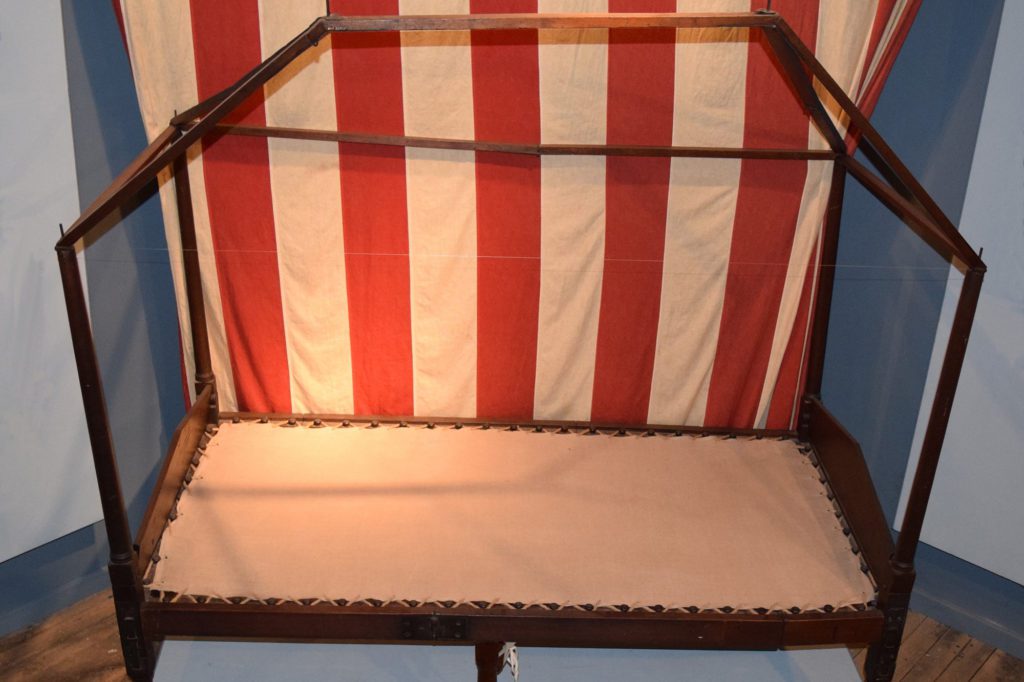
Anthony Wayne A fold-up camp bed designed for easy transport in the wilderness helped General Anthony Wayne sleep comfortably when he came to this area and ordered a fort built that would bear his name. The dedication of that fort on October 22, 1794 is recognized as our city’s birthday.
 |
|
Anthony Wayne exhibit, including camp bed |
An Emerging City Displays devoted to the Wabash & Erie Canal and the railroad recall the rise of a city that, like the village of Kekionga, would be built on commerce and transportation. Founding fathers like Samuel Hanna and Jesse Williams (chief engineer for the canal) are recognized for their accomplishments.
Industry Recreations of a blacksmith shop and a foundry demonstrate our growth as an industrial city. Silvanus F. Bowser created the self-measuring gas pump (they are still called “bowsers” in some parts of the world); Wayne Pump and Tolkheim made significant improvements to secure our place in transportation history.
 |
|
A re-creation of a foundry |
Made in Allen County
In the 1880s, there was a storefront in a building that is no more (why does that keep happening?) in the 600 block of South Calhoun. The building may be gone but the storefront continues in Gallery 3 at the History Center. It has been used for a number of displays during the time it has been part of our exhibit space but perhaps no show has been as appropriate as the one in there now.
Made In Allen County displays many of the items produced by local businesses, many regrettably (like that 1880s building) no longer around. It also features a mural of a 1912 East Creighton Avenue grocery store.
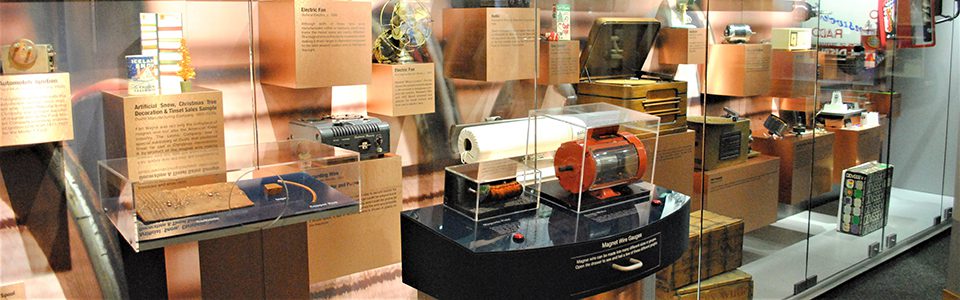
Some of the items in the storefront include numerous boxes of cigars (who knew that so many cigars were produced in Fort Wayne), Bursley’s Coffee, Mar-velo’s (a “cleanser, a water softener and a soap saver for the Kitchen, Laundry and Bath”), and a “Seald Sweet” juicer manufactured by the Magnavox Company – better known for their audio products. For those in need of a snack, there was a lot of candy (Lady Wayne Chocolates is just one example) and Seyfert’s potato chips, plus soda from the Crystal Bottling Works to wash it all down.
Don’t miss this powerful reminder of the entrepreneurial spirit that made this area a hotbed of innovation. Phase I of this exhibit (it’ll continue to grow) was made possible with support from Lincoln Financial Group Foundation. and M. P. Raker.
Behold the Face of Christ
Art has played a major role in the Catholic Church for many centuries. What would the Sistine Chapel be without Michelangelo’s ceiling? Or St. Peter’s without it’s Vatican City dome?
Churches throughout the Fort Wayne-South Bend Diocese are similarly blessed with beautiful art and architecture.
Sharon D. Little, a freelance journalist and photographer for several daily newspapers and the weekly publication Today’s Catholic, has photographed every diocesan church and captured the unique décor of each one.
Those photos will be on display at the History Center, beginning on December 17. Visitors will discover that each color image is like a prayer in a visual pilgrimage through the diocese.
 |
|
Sam Hanna |
Current Mini-Exhibit
Did you survive Fort Wayne’s Great Flood of 1982? It captured national news attention and even brought President Reagan to town to help build a sandbag dyke. Photos and mementoes of that occasion are now on display in this first floor exhibit.
Digital Collection
The History Center in partnership with the Helmke Library at Indiana University-Purdue University Fort Wayne (IPFW), has created an online Digital Collection. Follow the link for free access to many historic materials owned by the Allen County-Fort Wayne Historical Society, including photos, maps, and manuscripts.
|